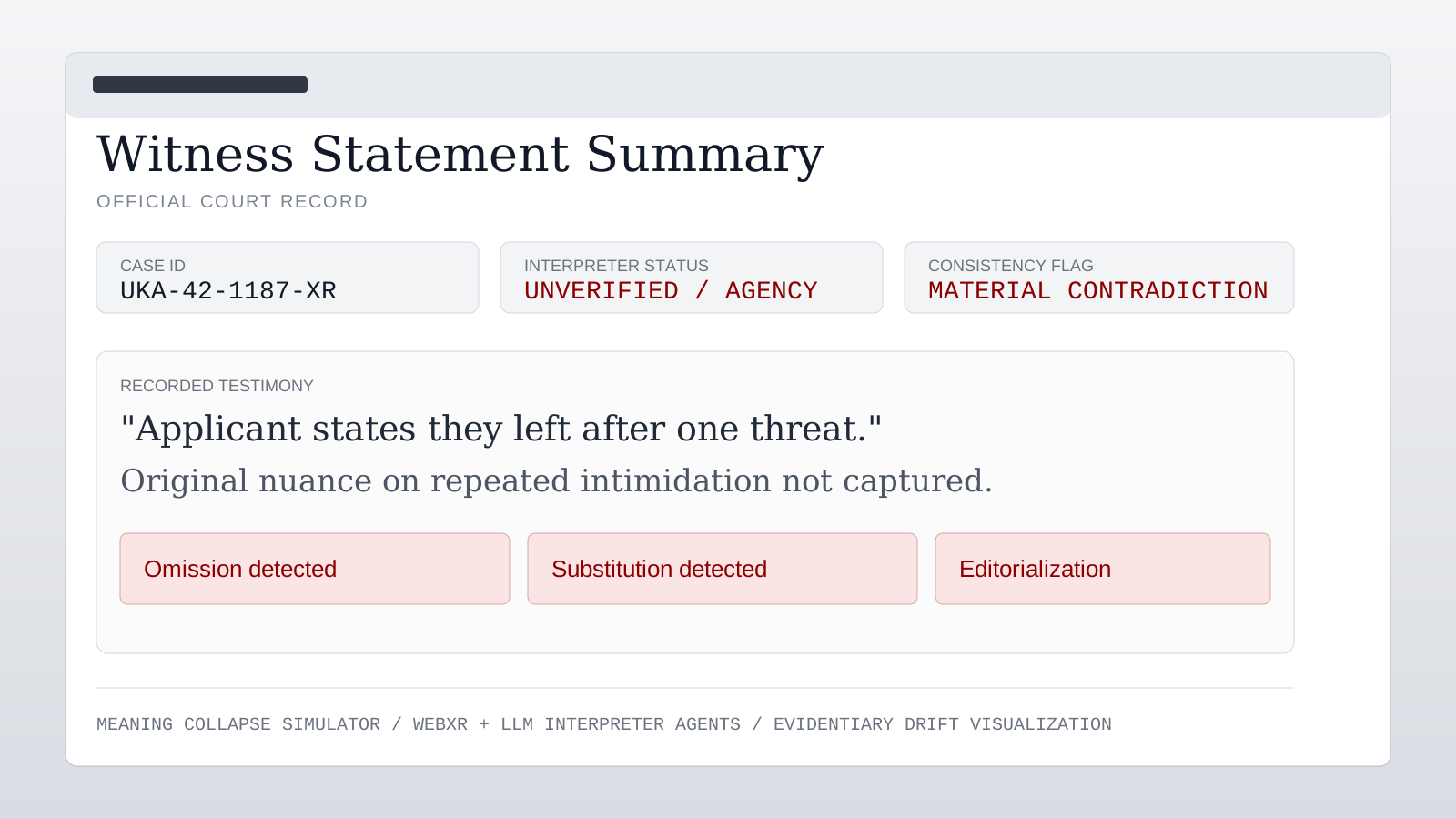
The UK asylum system demands consistency from applicants. It buys interpretation through a procurement chain that prioritises low cost over professional accreditation.
When an unqualified interpreter misreads a nuance, the court does not log a translation error. It logs a witness inconsistency. That is the system working as built.
What writing alone misses
I have been building this investigation through interviews with barristers, solicitors, and professional linguists. The pattern is clear: the system manufactures contradictions, then decides cases with them.
Writing can explain procurement chains. It cannot always make the distortion felt. A simulation can slow it down enough to see.
Follow the simulator build and future research notes.
View the simulation methodThe "Meaning Collapse" Simulator
I am building an interactive browser simulation that puts the user in the chair of an asylum seeker.
The simulation uses WebXR, real-time speech-to-text, and LLM-based interpreter agents to model hearing conditions:
- The Latency Trap: You have limited time to communicate complex experience.
- The Distortion Engine: Your words pass through a cost-optimised model that omits, substitutes, edits, and biases.
- The Record: You face your own testimony as the court record shows it: thinner, cleaner, and easier to call inconsistent.

Why this matters
The point is evidence, not novelty. If the simulation can reproduce meaning collapse, it can show that these failures are not random human mistakes. They come from procurement architecture.
If we can measure how fast meaning drifts, the case for accreditation and recording gets harder to ignore.
Join the Development
This is an open-research tool. If you build with LLMs, work in asylum law, or can stress-test the realism, get in touch.
FAQ
How does the simulation work?
It uses real-time speech-to-text and LLM processing to simulate interpreter-induced meaning drift.
Why does this matter for asylum proceedings?
It demonstrates how translation errors become credibility findings in UK courts.