Embodied record-making
The user sits inside the chain. Each stage changes what can be heard, remembered, and challenged.
Data can be ignored. Experience cannot.
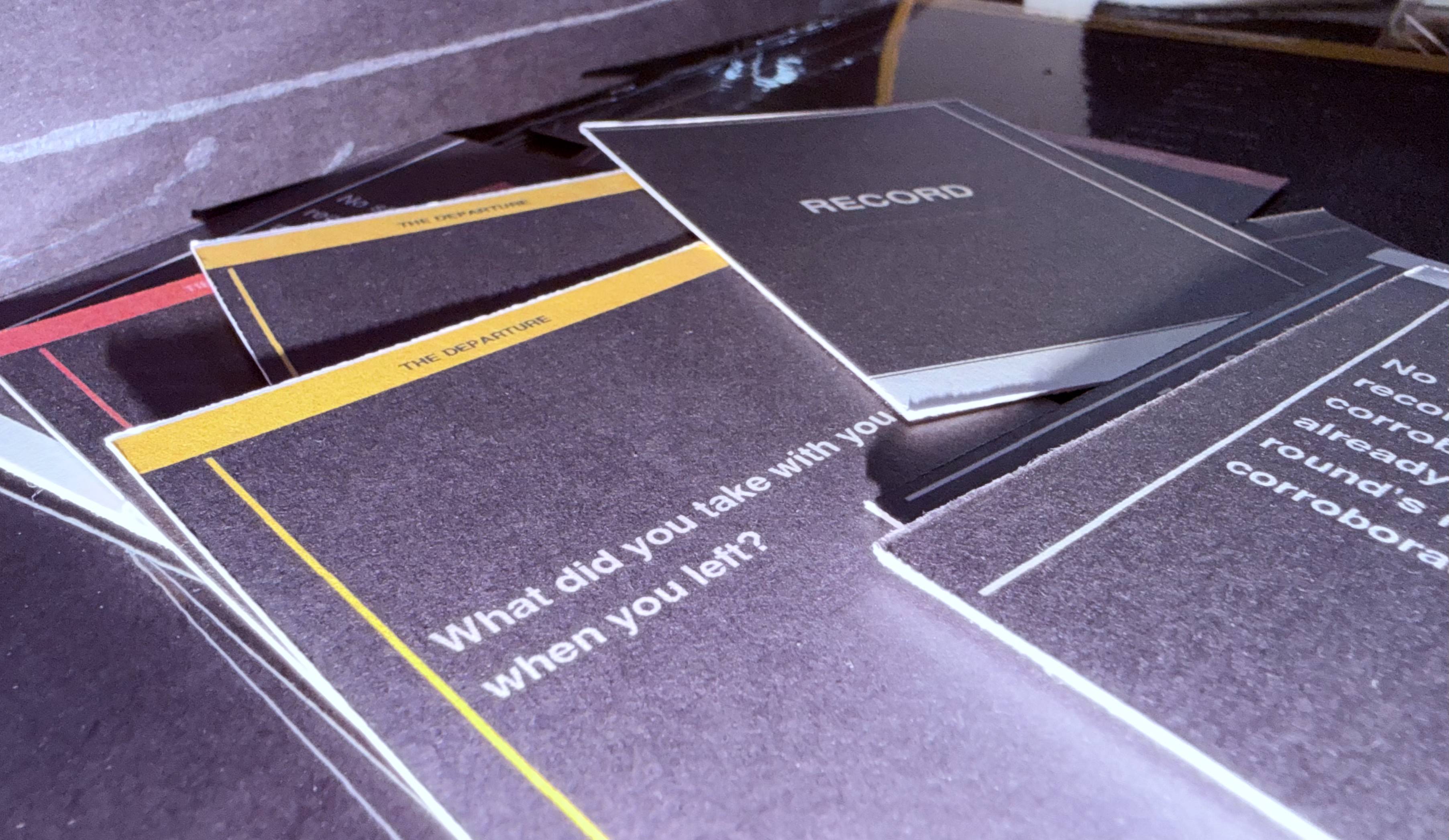
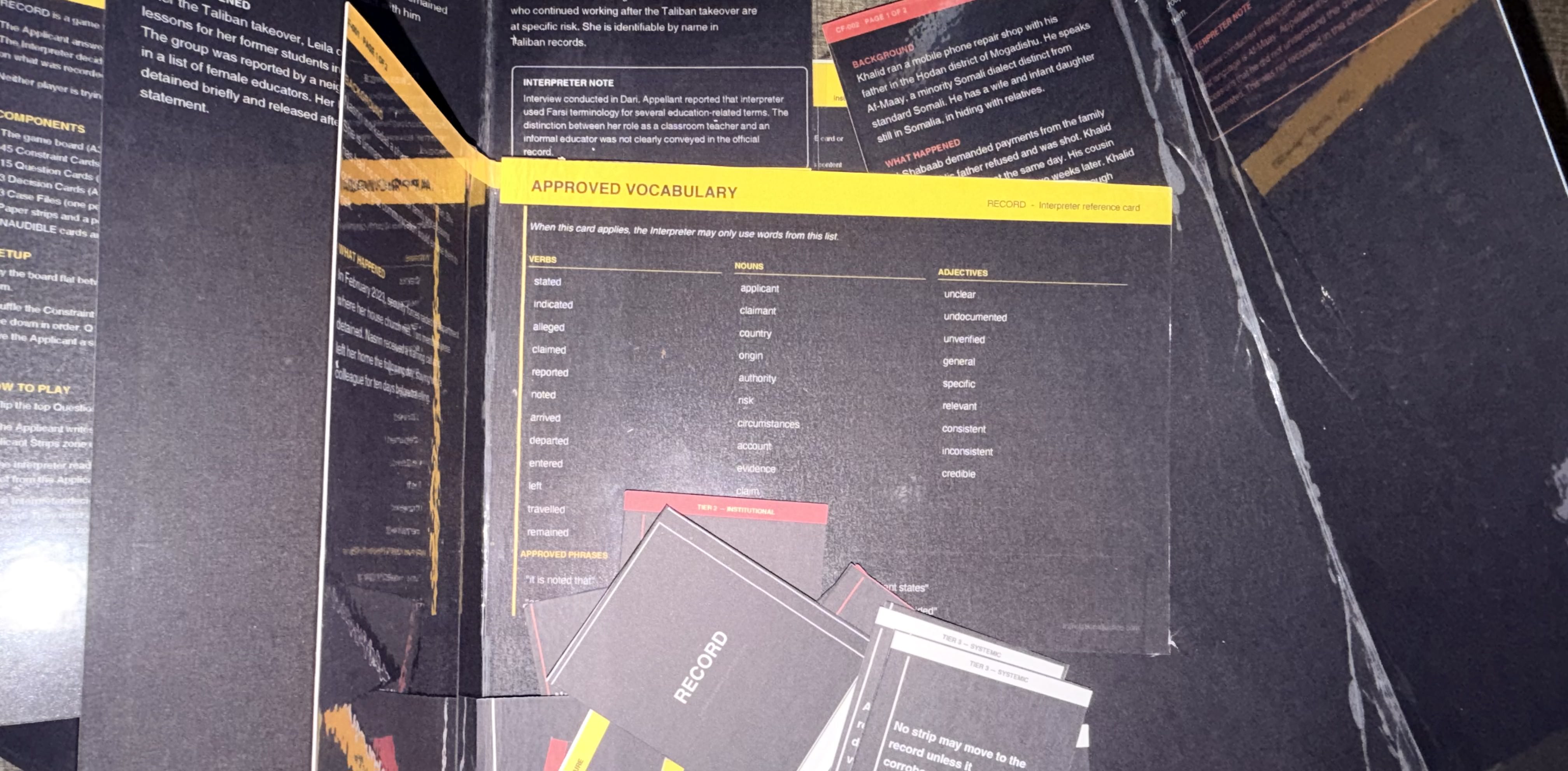
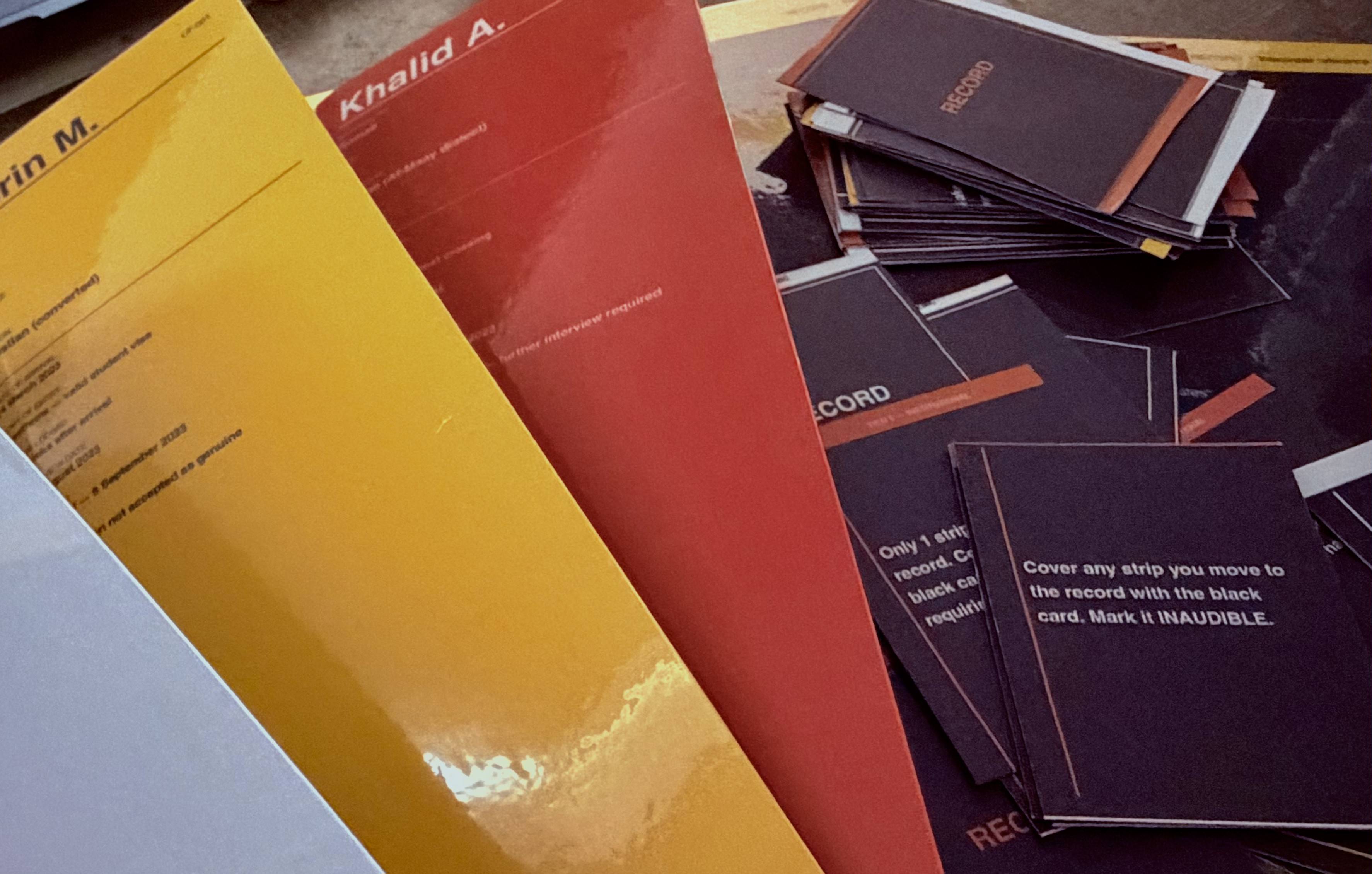
RECORD is a 2-player board game about interpretation failure in asylum interviews. One player is the Applicant. One is the Interpreter. The Applicant writes testimony on paper strips, one idea per strip. The Interpreter draws constraint cards and decides what enters the official record. The rest stays behind. The final decision uses what was recorded, not what was said. Neither player is trying to cause harm. The system is.
Prototype complete. Workshop sessions being built. Contact to discuss facilitation.
VR / WebXR / method
The simulation makes the hidden process visible: speech becomes interpretation, interpretation becomes record, and the record becomes judgment.
By the time the decision is written, the original speech may no longer be recoverable from the document.
VR and WebXR make the lag felt: speaking, being interpreted, being recorded, then being judged by a version that hardened without your control.
System behaviour
Language moves through layers. Each one adds pressure: delay, compression, domain mismatch, procurement logic, and the demand for a stable record.
situated, partial, embodied
compressed, substituted, reframed
fixed, searchable, comparable
treated as fact
The user sits inside the chain. Each stage changes what can be heard, remembered, and challenged.
The simulation supports workshops, legal education, talks, and research demonstrations about language failure in high-stakes settings.