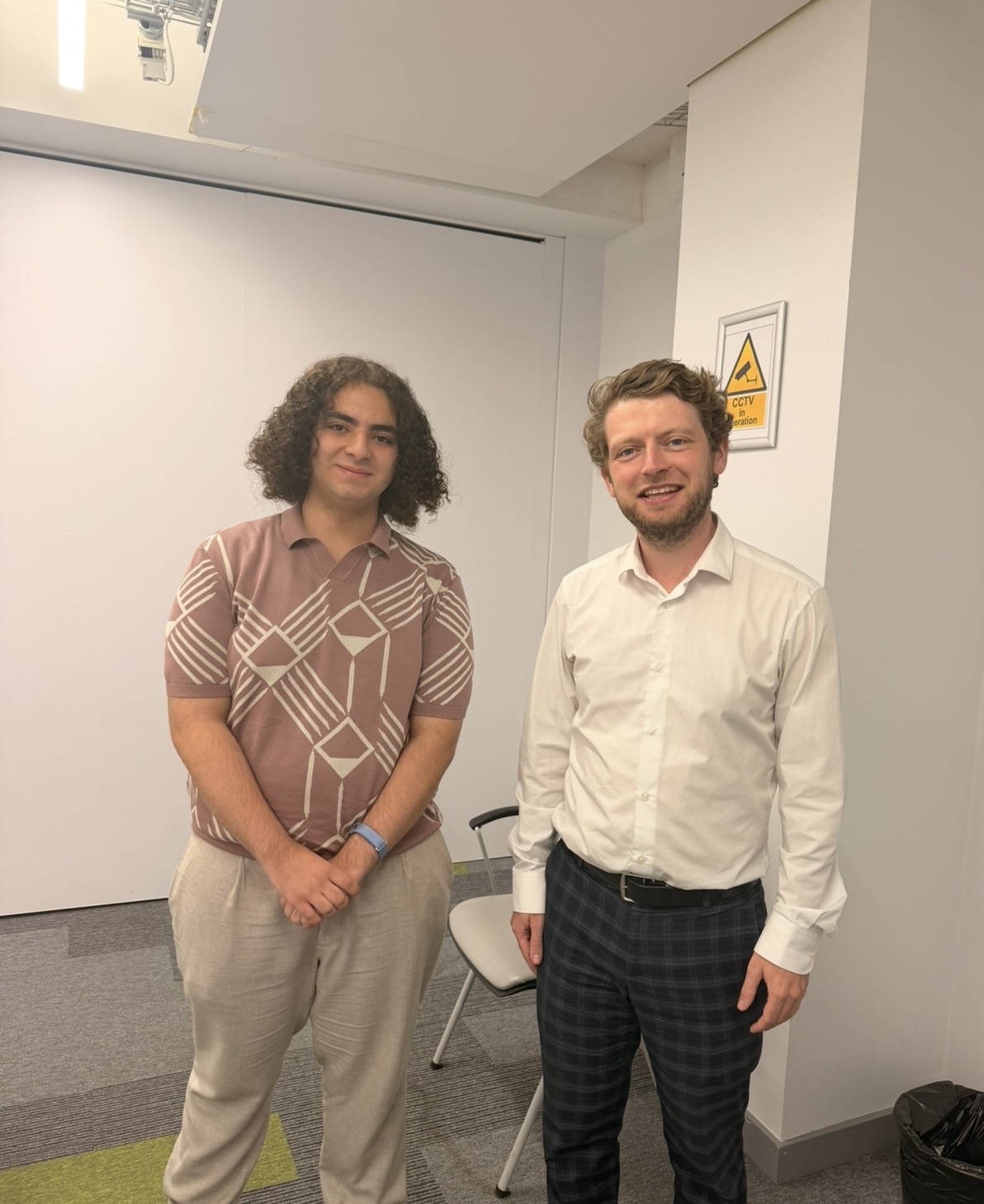
I recently met my MP, Connor Rand, to talk about something the asylum system keeps missing: the applicant's own words.
I am 15. That can make a meeting like this sound like a school exercise. It was not. I went in with a specific problem, evidence for it, and a reform that could actually fix it.
The problem I took into the room
When someone gives evidence in an asylum interview, they may speak through an interpreter. The interpreter turns their account into English. That English becomes the written transcript used by the Home Office.
But the original-language testimony is not kept as readable text. The person's words exist only as audio nobody routinely checks. The English interpretation becomes the official version.
Now AI is being used to summarise those English transcripts. This creates another layer. The applicant speaks. The interpreter translates. The AI shortens. The caseworker reads.
By the end, the decision can be based on a summary of an interpretation—not the testimony itself.
I have written about this as the wrong document problem. AI did not create the gap. It makes the existing gap harder to see.
What I argued for
The reform is simple: transcribe and retain what the applicant said in their original language, next to the English interpretation.
That would not solve every problem. It would make the system checkable. A mistranslation could be found. An appeal could compare the versions. An AI tool could work from the actual testimony instead of a second-hand record.
I also explained why interpreter standards matter. If the interpretation is going to decide whether someone looks consistent or credible, the system should know whether the person producing it is qualified. Right now, it often does not.
Why I wanted the meeting
Research can stay on a website and still be correct. But correctness is not enough. If the problem belongs to government, the argument has to reach people inside government.
That is why I met Connor. I wanted my MP to see the chain clearly: testimony, interpretation, transcript, AI summary, decision. At every stage, language is changed. At almost no stage is the original preserved.
This is not an argument against interpreters or against AI. Both can help. It is an argument against building decisions on words the speaker never got to check.
I left the meeting with the same point I entered with: if a system can decide whether a person is believed, it should keep what that person actually said.
The full proposal is in my policy briefing. You can also see where AI already enters the asylum process.