I built a board game because the argument needed to be felt.
A few weeks ago I printed, cut, and laminated a physical prototype of RECORD. It simulates interpretation failure in asylum interviews. This is how it came together.
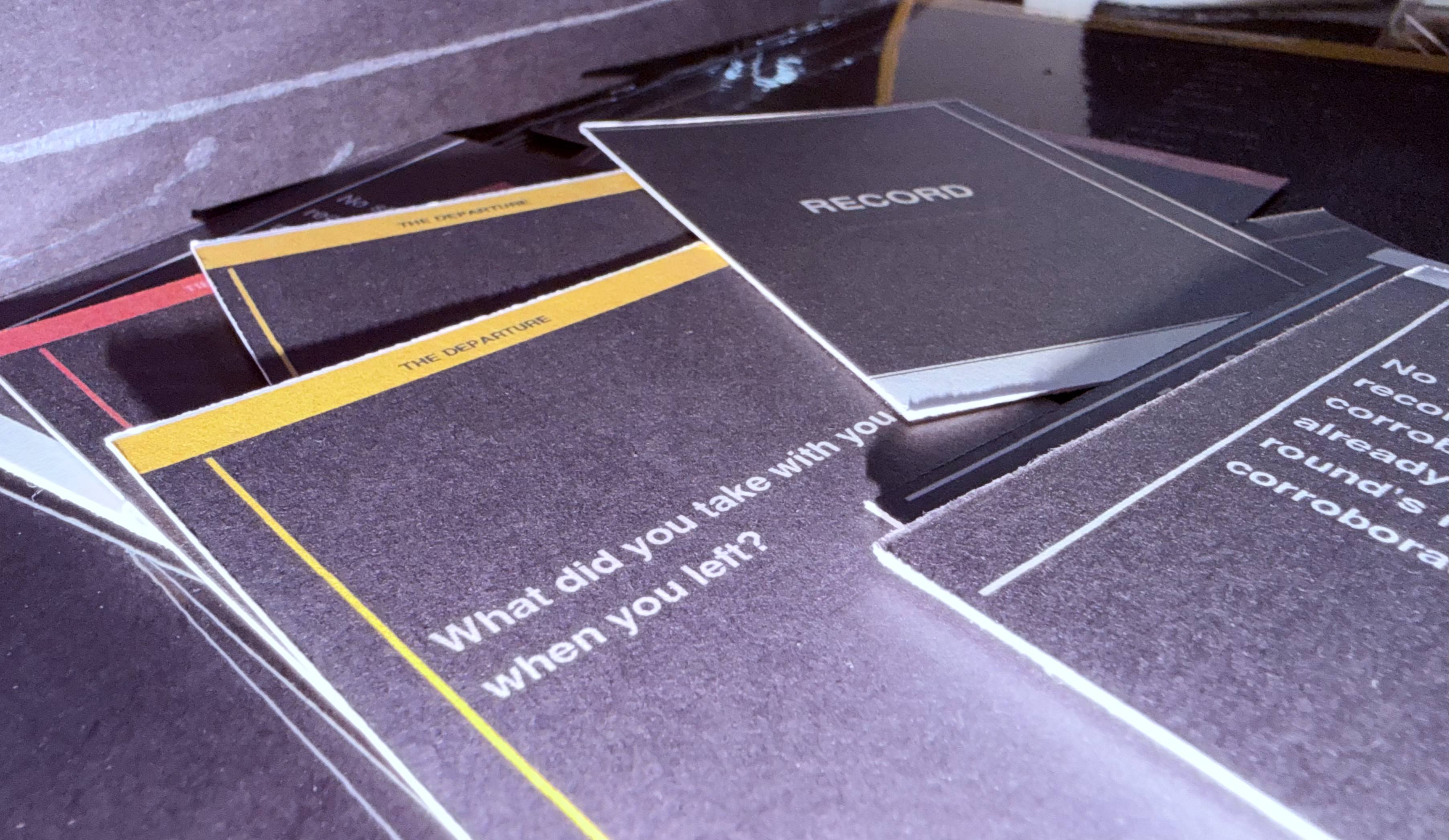
Why a board game
RECORD started as VR. I wanted someone to feel what happens when their words differ from the words recorded. Then I realised one person missed the point. The interview has two people in the language exchange. That is where the failure happens.
So I built something physical. One player is the Applicant. One is the Interpreter. The gap between speech and record sits between them.
The mechanics
The central mechanic is the Constraint Card. Each round, the Interpreter draws three cards in secret. Each card controls what can move to the official record. Some strips survive. Some are covered with INAUDIBLE. Some stay behind.
The cards come from real interviews. An interpreter told me officers push them to keep pace. No time for clarification. No flexibility. Another said interpreting is not knowing two languages. It is understanding two languages. The system ignores that difference.
The Question Cards changed a lot. I read a real asylum interview transcript and the tone stayed with me. Pressing. Relentless. Asking for precision from someone whose memory may not arrive in order. One Constraint Card asks the Interpreter to move a strip out of sequence. That is exactly the kind of inconsistency used against applicants.
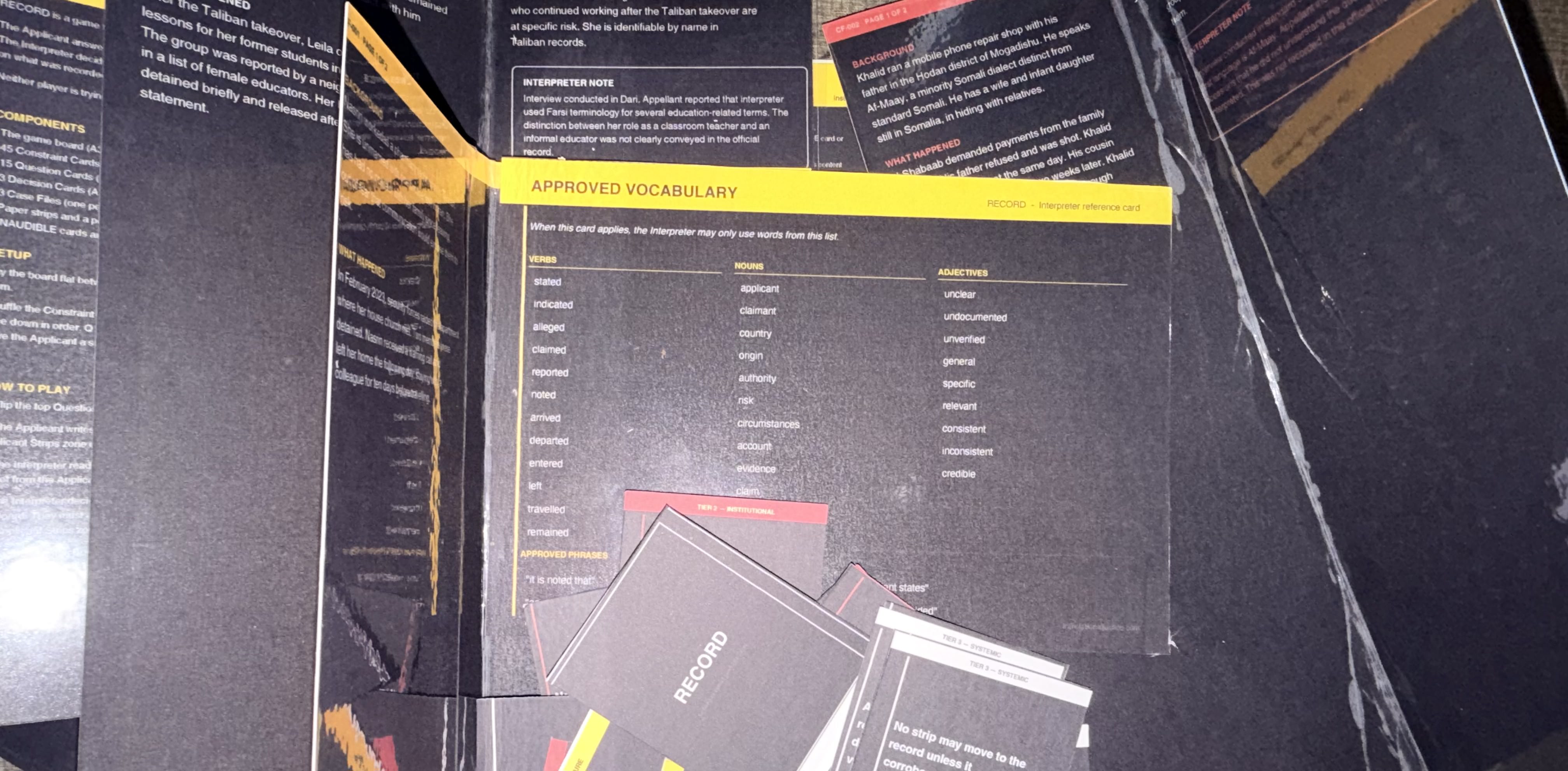
The case files
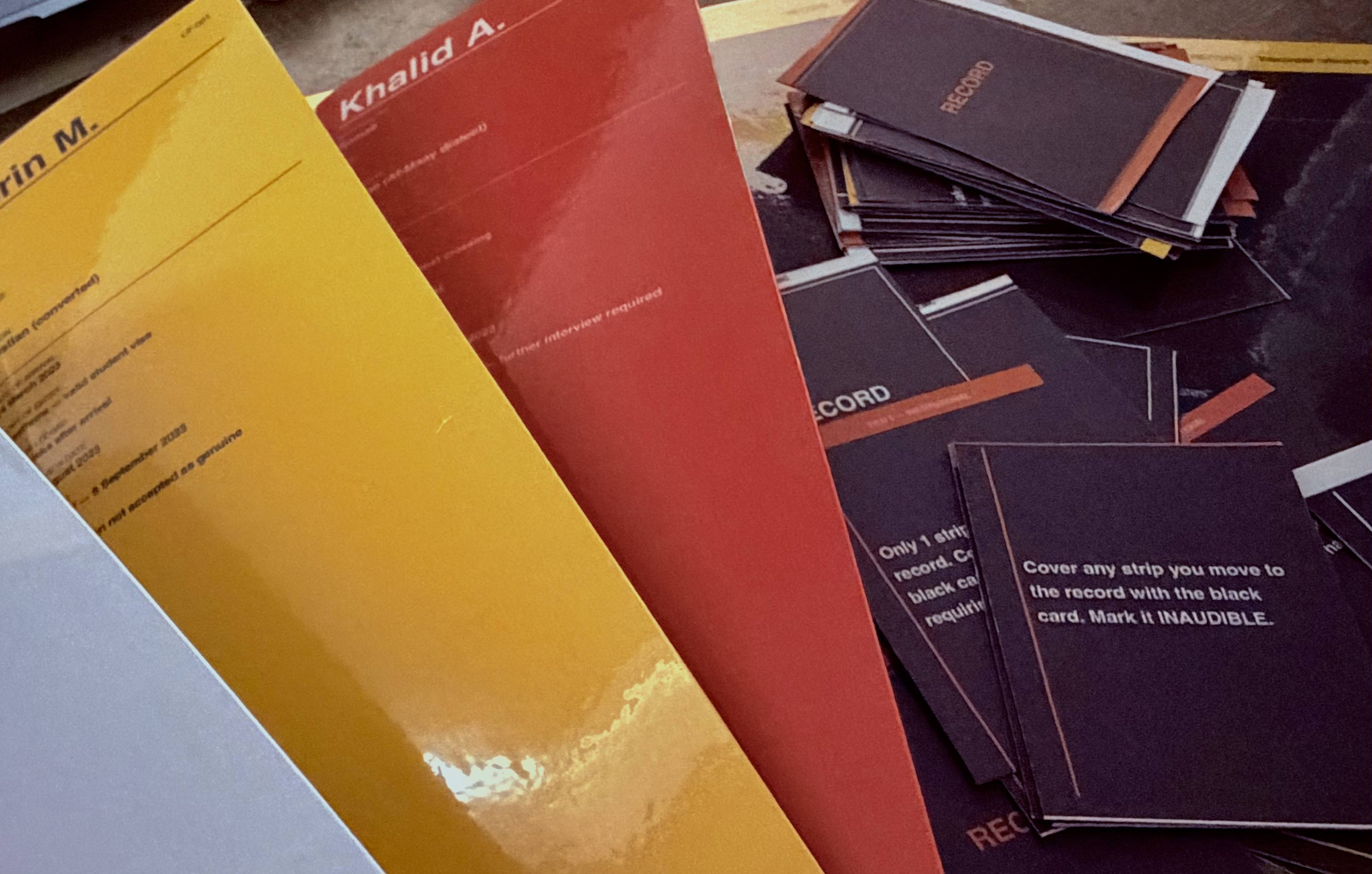
Each game uses one of three characters: Nasrin M., Khalid A., and Leila H. They are fictional composites. The patterns come from UK asylum tribunal records.
Nasrin is an Iranian Christian convert. Conversion cases are often refused in the UK system. Theology, faith, belief, personal testimony. Hard to interpret accurately. Easy to flatten.
Khalid speaks Af-Maay, a minority Somali dialect distinct from standard Somali. He is interviewed in standard Somali. Interpreters are booked for language, not dialect. The applicant cannot fully express himself. The record calls that inconsistency.
Leila is an Afghan teacher who kept educating girls after the Taliban takeover. Her case turns on terminology. Formal classroom teaching and informal covert teaching are different. In her first interview, interpretation collapsed the difference. Refused, then allowed on appeal.
Three different types of failure. Theological and personal testimony. Dialect mismatch. Technical terminology. The game rotates through all of them.
What it feels like to play
I printed everything on 300gsm card stock, laminated the case files, cut and corner-rounded the cards. It feels like a real game. The constraint cards have weight. Drawing three in secret and deciding which strips of someone's testimony enter the record feels uncomfortable. It should.
That discomfort is the point. The decision is made on what was recorded, not what was said. RECORD makes you feel that.
What is next
The A3 board and packaging still need work. Next is a 90-minute workshop for legal practitioners and refugee organisations.
If you work in asylum law, refugee support, or legal education and RECORD could help your team, get in touch.